
The Unseen Threat: How AI Voice Cloning and Deepfake Scams Are Redefining Financial Fraud

Imagine this chilling scenario: Your phone rings, displaying your daughter’s number. Her voice, undeniably hers, is panicked, tearful. She’s been in an accident, she desperately needs money wired immediately, and she implores you not to tell anyone yet. Every parental instinct screams for you to act now, to help your child. But here’s the terrifying truth: the voice on the other end might not be her at all.
This isn’t science fiction; it’s the alarming reality of AI voice cloning technology, now a readily accessible tool for sophisticated scammers. Using mere seconds of audio, often scraped from public social media videos, these fraudsters can replicate a loved one’s voice, weaponizing emotional urgency to extract immediate financial aid. This insidious form of financial fraud is one of the fastest-growing threats today, disproportionately targeting women and exploiting the most fundamental human instinct: the desire to protect family.
This article delves into the intricate mechanics of these AI-driven scams, offers crucial insights into how to identify them, and provides a robust framework to safeguard your family and finances before you become the next target.
The Alarming Rise of AI-Powered Deception
The digital landscape is undergoing a profound transformation, with artificial intelligence not only enhancing convenience but also empowering a new generation of sophisticated criminals. The evolution of financial fraud, once reliant on crude phishing attempts and elaborate but discernible schemes, has taken a significant leap forward.
The Evolution of Digital Fraud
For decades, scammers have preyed on human vulnerabilities: greed, fear, and a lack of information. Early forms included "Nigerian Prince" emails, lottery scams, and basic phishing links designed to steal credentials. While these still persist, their effectiveness wanes as public awareness grows. The advent of caller ID spoofing added a layer of deception, making it appear as if calls originated from legitimate sources. However, the human element—the actual voice or appearance of a person—remained largely beyond the scammer’s reach, until now.
AI voice cloning and deepfake video technology have shattered this barrier, allowing fraudsters to bypass standard digital defenses and psychological skepticism. This new wave of fraud doesn’t just attempt to trick your brain; it triggers your heart, exploiting deep-seated emotional bonds with unprecedented precision.
The Psychological Weaponization of AI
What makes this particular wave of fraud so dangerous is its direct assault on our instinct to protect loved ones. Scammers understand that in a moment of perceived crisis involving family, rational thought often takes a backseat to urgent, empathetic action. By meticulously crafting scenarios that evoke panic, urgency, and secrecy, AI-powered scams create an emotional pressure cooker designed to short-circuit critical thinking. The familiar voice or face acts as an immediate trust signal, overriding any nascent doubts and compelling victims to act swiftly and decisively, often making irreversible financial decisions. This weaponization of empathy represents a new, far more insidious frontier in the ongoing battle against financial fraud.
Deepfakes and Voice Clones: A Primer on the Technology
Understanding the mechanics behind these sophisticated scams is the first step toward effective defense. The technology, once the domain of specialized studios or intelligence agencies, is now remarkably accessible.
How AI Voice Cloning Works
At its core, AI voice cloning operates by feeding a short audio sample into specialized software. This software, utilizing machine learning algorithms, analyzes and learns the unique patterns, tone, pitch, rhythm, and even subtle inflections of that voice. From just a few seconds of raw audio—perhaps extracted from a public social media video, a TikTok clip, a podcast appearance, a recorded voicemail, or even a news interview—the AI can generate a synthetic voice that can articulate any given text, either in real-time during a phone call or as a pre-recorded message.
The output is astonishingly authentic, sounding indistinguishably like the original person. This means a scammer can make a fake child’s voice say, "Mom, I’m in jail, I need bail money now!" with the precise vocal characteristics of your own child, creating an immediate, visceral response.
Demystifying Deepfake Video
Deepfake video technology operates on a similar principle, but with visual elements. AI algorithms are used to map a person’s facial movements, expressions, and even body language onto existing video footage. Early deepfakes were often betrayed by tell-tale signs: blurry edges, unnatural facial contortions, or poor synchronization. However, the technology has advanced at a dizzying pace. Current deepfakes can be remarkably convincing, capable of showing a seemingly real person saying or doing things they never actually did.
Scammers leverage deepfakes to impersonate financial advisors, bank representatives, celebrities endorsing fraudulent investments, or even romantic partners in long-running "pig butchering" scams. The visual component adds another layer of credibility, making the deception incredibly difficult to discern without specific awareness.
Accessibility: The Democratization of Deception
Perhaps the most troubling aspect of these technologies is their accessibility. AI voice cloning and deepfake video generation are no longer exclusive to state-sponsored actors or multi-million dollar production houses. Consumer-grade software, online platforms, and even open-source tools have dramatically lowered the barrier to entry. This "democratization of deception" means that individual bad actors with basic technical literacy can now wield tools previously reserved for highly sophisticated organizations.
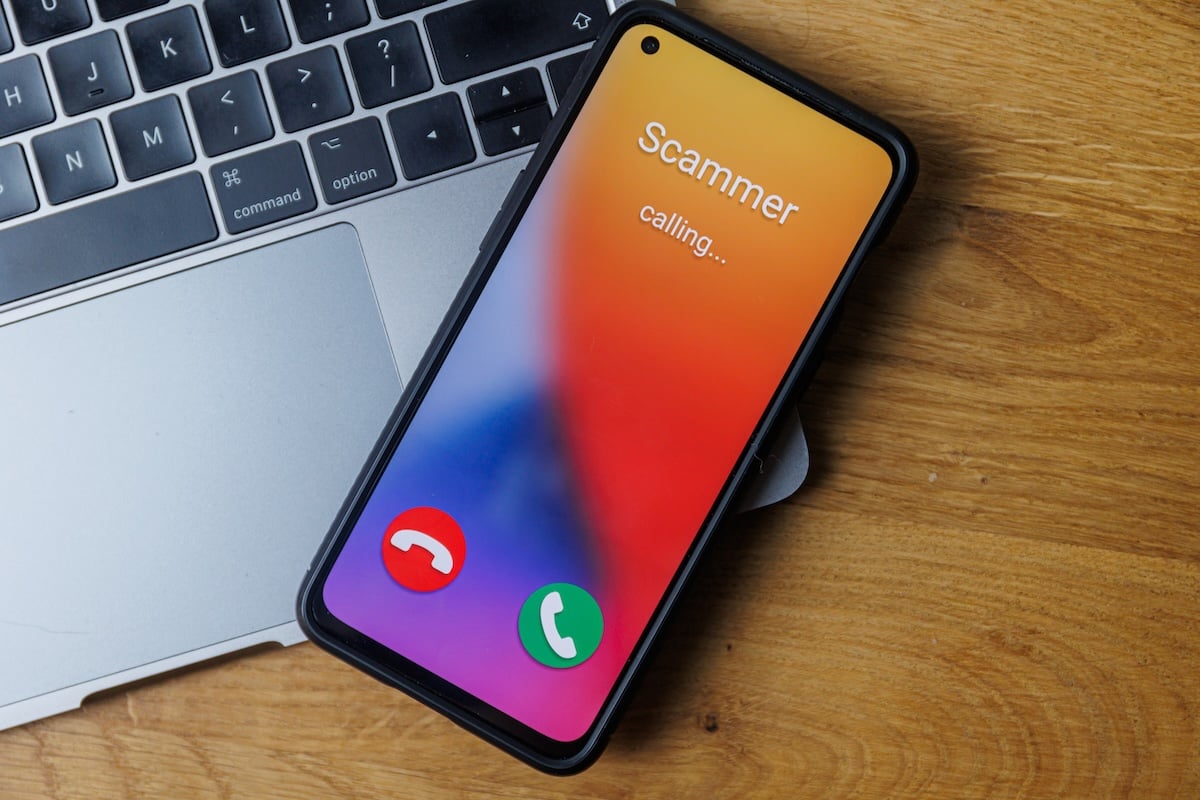
This widespread availability significantly increases the potential for fraud. If you or your family members have ever posted videos, recorded voicemails, or participated in online interviews, your voices and faces are potentially usable as source material. This reality underscores the critical importance of preparedness and informed vigilance, rather than a retreat from the digital world.
The Disproportionate Impact: Why Women Are Primary Targets
While these scams pose a threat to everyone, data indicates that women face a disproportionate risk from these sophisticated, emotionally manipulative schemes. This trend is not accidental but stems from societal roles and the specific tactics employed by fraudsters.
Exploiting Empathy and Urgency
Fraudsters are not targeting randomly; they are leveraging behavioral psychology. Women often assume primary roles as caregivers and family financial managers, placing them at the nexus of familial well-being. Scammers exploit this inherent empathy and sense of responsibility. Rather than relying on generic cold calls, they craft narratives that trigger an immediate, protective response. The urgency of a child in danger, a parent in distress, or a sibling facing legal trouble directly taps into these deeply ingrained caregiving instincts, overriding skepticism.
The Role of Primary Caregivers and Financial Managers
In many households, women are the first point of contact for family emergencies and often manage day-to-day finances. This dual role makes them ideal targets. By spoofing recognizable caller identification tags or, more chillingly, cloning a child’s voice, criminals bypass initial digital defenses and directly penetrate the emotional defenses. They understand that a targeted individual will prioritize an apparent family crisis over critical scrutiny, leading to immediate financial action when a loved one appears to be in imminent, life-threatening danger. The request for secrecy ("don’t tell anyone yet") further isolates the victim, preventing them from seeking a second opinion or verification from other family members.
Recognizing the Red Flags: Identifying AI Voice Cloning and Deepfake Scams
Your first line of defense lies in understanding the common patterns and subtle tells of these AI-powered deceptions. Vigilance and an informed skepticism are your most powerful tools.
The Urgent Call Pattern
AI voice cloning scams almost invariably follow a specific, emotionally charged script designed to create panic and isolate the victim:
- Immediate Crisis: The call begins with a loved one (often a child or grandchild) in severe distress – an accident, arrest, medical emergency, or legal trouble.
- Urgency and Secrecy: The situation is portrayed as extremely urgent, with a rapidly closing window for action. Crucially, the caller demands that you not tell anyone else yet, explicitly designed to cut you off from getting a second opinion or verifying the story.
- Irreversible Payment Methods: Money is needed immediately, and the preferred methods are almost always wire transfers, cryptocurrency, or gift cards. These methods are chosen specifically because they are nearly impossible to reverse or trace, ensuring the scammer’s immediate gain.
- Added Pressure: Sometimes, a second voice joins the call, posing as a police officer, lawyer, or hospital administrator, to add an air of official legitimacy and escalate the pressure.
- Voice Discrepancies: While the voice may sound uncannily familiar, listen for subtle anomalies: unusual cadence, pauses in the wrong places, a monotone quality, or emotion that doesn’t quite match the words being spoken. The scammer might also claim poor reception or a sore throat to explain any imperfections.
The entire structure of these calls is engineered to keep you in a state of panic, compelling you to act before your rational brain can catch up. This is not accidental; it is a meticulously designed psychological manipulation.
Visual Cues in Deepfake Videos
When confronted with a video call or recording, deepfakes, despite their sophistication, often exhibit subtle tells that can betray their artificial nature:
- Lip Sync Issues: Watch for lips that don’t quite sync perfectly with the audio.
- Unnatural Blinking: Deepfake subjects might blink too frequently, too infrequently, or in an odd, robotic pattern.
- Skin Irregularities: The skin might appear unusually smooth, waxy, or conversely, have odd pixelation or blurring.
- Stiff or Repetitive Movements: Facial expressions or body movements might seem stiff, unnatural, or repeat in an uncanny loop.
- Generic Backgrounds: The background might appear flat, static, or lack the authentic details of a lived-in space, suggesting a greenscreen or a digitally inserted backdrop.
- Lighting and Shadow Anomalies: Inconsistent lighting or shadows that don’t match the environment can be a giveaway.
- Audio/Video Lag: Noticeable lag or digital artifacts, even on a good connection, can be a sign.
While deepfake technology is rapidly improving, these subtle discrepancies often appear, especially in spontaneous or unscripted content.
Auditory Anomalies in AI Voiceovers
Beyond phone calls, AI-generated voices are increasingly used in social media videos, advertisements, and even "educational" content pushing investment advice. Listen for:
- Uncanny Smoothness: AI voices often possess an unnaturally perfect cadence or smoothness, lacking the natural inconsistencies, hesitations, or variations found in real human speech. It sounds almost right, but subtly off.
- Monotone or Mismatched Emotion: The voice might lack genuine emotional range, delivering urgent words in a flat tone, or expressing emotion that doesn’t quite align with the visual content or the gravity of the message.
- Awkward Pauses or Pronunciation: The AI might pause in unusual places, mispronounce common words, or struggle with complex sentences, indicating a text-to-speech conversion rather than natural speech.
Trust your instinct. If a voice sounds "off" in any way, even subtly, it warrants immediate suspicion.
Safeguarding Your Family and Finances: Essential Defenses
While the threat is formidable, effective defenses are available. Proactive measures and clear communication within your family are paramount.
The Power of the Family Emergency Passphrase
One of the most powerful and simple things you can do is establish a family emergency passphrase today, before any crisis arises. AI voice cloning scams thrive on panic, exploiting that split second before rational thought kicks in. A secret passphrase acts as an immediate circuit breaker.
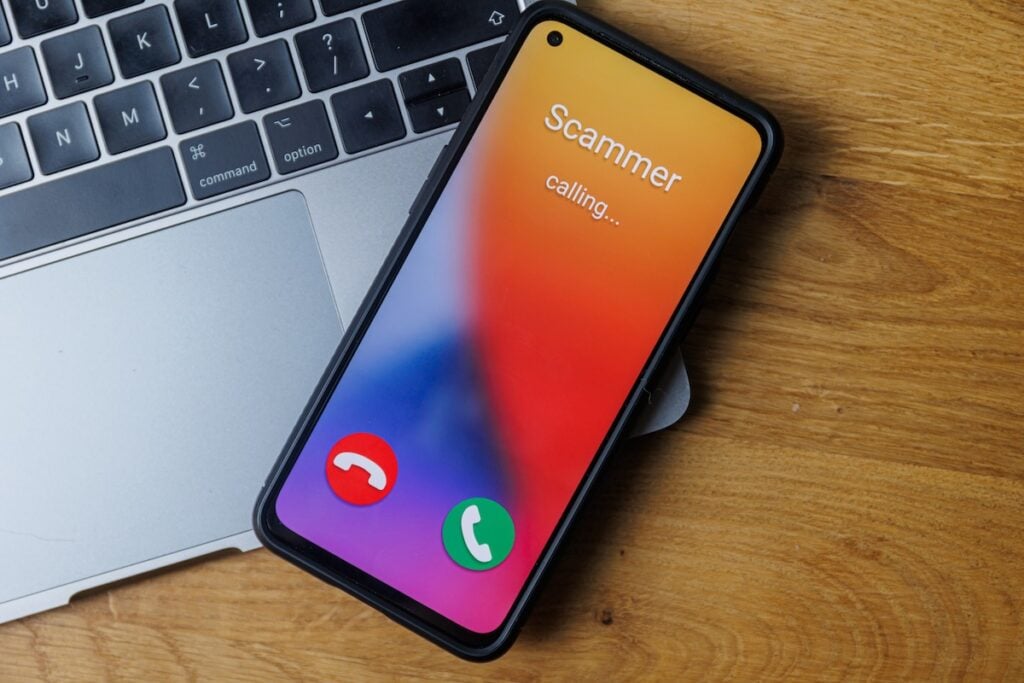
- How it Works: You and your immediate family members agree on a unique, secret word or phrase that only your inner circle knows. It should be specific, random, and memorable, something no outsider could ever guess. Examples: "Purple cactus," "Grandma’s jollof rice," "Blue Friday." The content is irrelevant; its secrecy is everything.
- The Non-Negotiable Rule: If anyone calls claiming to be a family member in distress and asks for money or urgent action, the rule is absolute: you ask for the passphrase before doing anything else. A real family member will know it; a scammer never will.
- Setting it Up: Have this conversation now. Call or text your immediate family and explain the threat and the solution. Choose the phrase together.
- Secure Storage: Write it down somewhere safe and accessible in an emergency, but not on your phone’s lock screen or in a publicly viewable note.
- Regular Review: Periodically revisit the passphrase. If you suspect it might have been compromised or shared too widely, change it immediately.
As Bola Sokunbi, Founder of Clever Girl Finance, emphasizes, "One of the most powerful things you can do to protect your family’s finances is also one of the simplest. Set up a family emergency passphrase and make sure every person you love knows to use it before sending any money in a crisis. It takes five minutes and it could save everything."
Verifying Identity Beyond the Voice
Beyond the passphrase, always employ multi-factor verification for any urgent requests:
- Call Back on a Known Number: If you receive a suspicious call, hang up immediately. Do not call the number that just called you. Instead, call the person back on the number you already have saved in your phone for them. If they don’t answer, try another family member.
- Alternate Communication Channels: If a call feels off, try contacting the person via text message, email, or even a different app (e.g., WhatsApp video call) to verify their identity and situation.
- Ask a Personal Question: Ask a question only the real person would know the answer to, especially something obscure or related to a shared memory. Avoid questions with easily guessable answers (e.g., "What’s my birthday?").
- Video Call Request: For any critical video communication, initiate the call yourself or request a spontaneous action (e.g., "Wave your left hand," "Hold up two fingers") to check for deepfake tells.
Securing Your Digital Footprint
While it’s unrealistic to disappear from the internet, you can reduce your vulnerability:
- Review Privacy Settings: Tighten privacy settings on social media platforms to limit who can see and download your audio and video content.
- Be Mindful of Public Posts: Think twice about sharing extensive audio or video recordings of yourself or vulnerable family members publicly.
- Avoid Public Wi-Fi for Sensitive Communications: Use secure networks for financial transactions or personal calls.
- Strong, Unique Passwords and MFA: Implement strong, unique passwords for all online accounts and enable multi-factor authentication (MFA) wherever possible. This protects against account takeovers that could expose personal data.
Understanding Payment Red Flags
- Irreversible Payments: Any request for money via wire transfer, cryptocurrency, or gift cards in an emergency is a massive red flag. These methods are chosen by scammers precisely because they are nearly impossible to reverse or trace. Legitimate institutions or family members would rarely, if ever, demand such payment methods in an urgent crisis.
- Unsolicited Financial Advice: Be highly skeptical of any unsolicited investment advice, particularly from social media videos featuring celebrities or "experts." Always verify with a trusted financial advisor.
Official Responses and Broader Implications
The rise of AI fraud is not merely an individual problem; it presents significant challenges for law enforcement, financial institutions, and society at large.
Law Enforcement and Regulatory Challenges
Agencies like the FBI and the Federal Trade Commission (FTC) are actively tracking these scams and issuing warnings. However, prosecuting AI fraudsters is incredibly complex due to:
- Global Nature: Scammers often operate from different countries, making jurisdiction and extradition challenging.
- Anonymity: Cryptocurrency and sophisticated digital tools allow fraudsters to maintain high levels of anonymity.
- Rapid Technological Evolution: Law enforcement struggles to keep pace with the rapid advancements in AI tools used by criminals.
Victims are strongly encouraged to report incidents to local police and federal agencies like the FBI’s Internet Crime Complaint Center (IC3) or the FTC. While recovery of funds is often difficult, reporting helps agencies track patterns and develop countermeasures.
The Role of Financial Institutions
Banks and other financial institutions are investing in AI-driven fraud detection systems to identify suspicious transactions. They also play a crucial role in educating customers about new threats. However, their ability to reverse transactions is limited, especially with wire transfers and cryptocurrency. They can flag suspicious activity, but the ultimate responsibility for verifying urgent requests often falls to the individual.
Eroding Trust in the Digital Age
Beyond financial loss, the proliferation of deepfakes and AI voice cloning poses a broader societal threat: the erosion of trust. When a familiar voice or face can be convincingly faked, it becomes harder to discern truth from deception. This "reality crisis" can lead to increased skepticism, making genuine communication more difficult and potentially fueling misinformation campaigns on a larger scale.
The Psychological Toll on Victims
The emotional impact on victims of AI scams is profound. Beyond the financial loss, individuals often experience deep feelings of betrayal, shame, and guilt. The violation of trust, especially when it involves the perceived voice of a loved one, can be deeply traumatizing, leading to lasting psychological distress and a diminished sense of security.
Your Immediate Action Checklist
To empower yourself and your family against this evolving threat, take these concrete steps today:
- Set Up a Family Emergency Passphrase: Convene your immediate family members and agree upon a secret word or phrase that only your inner circle knows. Make it a non-negotiable rule to request this passphrase for any urgent financial requests from a "loved one."
- Verify Every Urgent Request: If you receive a call or message from a family member requesting money, hang up immediately. Call them back on a number you know is theirs, or contact another family member to verify the situation. Do not trust caller ID alone.
- Refuse Irreversible Payments: Never send money via wire transfer, cryptocurrency, or gift cards in response to an urgent request. These are the preferred methods for scammers because they are untraceable and irreversible.
- Guard Your Digital Footprint: Review and tighten privacy settings on all your social media accounts. Be mindful of the amount of personal audio and video content you and your family share publicly.
- Be Skeptical of Unsolicited Contact: If a financial institution or official contacts you unexpectedly via video call or with urgent requests for account verification, hang up. Call their official number directly, found on their website or your statements.
- Trust Your Instincts: If a voice on a call sounds "off"—unusual cadence, flat emotion, or awkward pauses—or if a video looks slightly unnatural, trust that feeling. Ask specific, unscripted questions that only the real person would know.
- Educate Your Loved Ones: Share this information with vulnerable family members, especially elderly parents or grandparents, who are often prime targets for "grandparent scams" now amplified by AI.
- Report All Attempts: Even if you don’t fall for the scam, report the attempt to the FTC (reportfraud.ftc.gov) and your local law enforcement. This helps track scammer activity.
You Are Already Ahead by Knowing This
It is crucial to acknowledge that these scams are built by individuals who have invested significant resources into manipulating emotions and exploiting vulnerabilities. If you have ever felt close to falling for one, or if you worry about your ability to detect it, please do not blame yourself. Your instinct to protect those you love is not a weakness; it is one of your most admirable qualities.
What you can do right now is get prepared. Set up the family passphrase. Share this article with the women and men in your life. Know the steps to take if it ever happens. The more informed your circle is, the harder it becomes for these scammers to find an entry point.
You deserve to feel safe, confident, and protected when it comes to your money and your family. The more you know, the safer your family becomes. And now, you know.